
Leah Penniman: Farming While Black
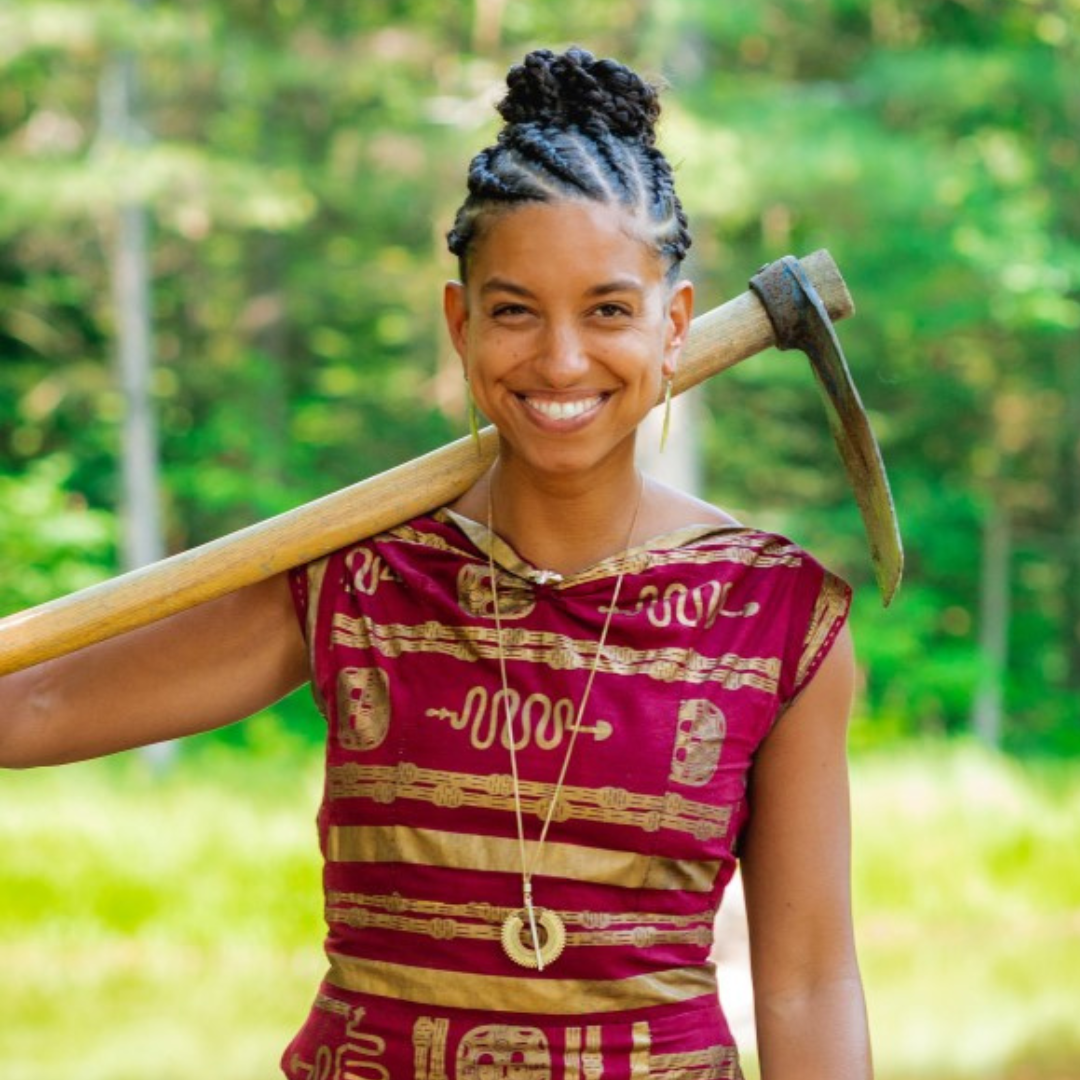
“Farming while Black is an act of defiance… a means to honor the agricultural ingenuity of our ancestors.”
-Leah Penniman
Food justice movements affirm that access to land, healthy food, and ecological knowledge are essential for dignity and liberation. Leah Penniman has become a leading voice in this work, blending farming, spirituality, and activism to empower Black and Brown communities. Through her teaching and organizing, she has helped reclaim land as a site of healing, sovereignty, and cultural resilience.
Leah Penniman is an American farmer, educator, and author. Trained in ecology and dedicated to food justice, she co-founded Soul Fire Farm in Grafton, New York, in 2011. The farm is both a working agricultural space and a center for training, education, and activism. Penniman’s work has centered on dismantling racism in the food system, creating pathways for land access, and restoring Afro-Indigenous farming traditions.
Her books and teachings, including Farming While Black: Soul Fire Farm’s Practical Guide to Liberation on the Land, argue that reclaiming farming is central to cultural survival and ecological justice. Penniman is recognized as a leader in food sovereignty, linking racial justice, ancestral knowledge, and regenerative agriculture.
Penniman’s philosophy begins with the recognition that farming is more than food production. She teaches that it is also a spiritual practice, a way of repairing the wounds of enslavement, and a path to collective liberation.
Her teachings emphasize:
Food Sovereignty: communities have the right to grow, distribute, and eat food that nourishes them.
Ancestral Farming Traditions: Afro-Indigenous practices such as polyculture, seed saving, and spiritual honoring of the land.
Racial Justice in Farming: confronting systemic racism in land ownership and food access.
Farming as Healing: the land as a place of repair for historical and personal trauma.
These teachings come alive at Soul Fire Farm, where apprentices learn traditional practices, communities receive fresh produce through food shares, and ceremonies honor the spirit of the land. Every seed planted, every training held, and every ancestral ritual reclaimed embodies Penniman’s vision of farming as liberation.
Her call to root justice in the soil acts as both philosophy and practice. Every time a community grows its own food, saves ancestral seeds, or reclaims access to farmland, it affirms freedom and resilience. Through these acts, her vision of ecological and cultural renewal becomes tangible.
We honor Leah Penniman for her devotion to food sovereignty, ancestral farming traditions, and racial justice. Her work reminds us that liberation begins with the earth and with the communities who tend it.
Resources & Further Reading
Farming While Black: Soul Fire Farm’s Practical Guide to Liberation on the Land by Leah Penniman
Soul Fire Farm (soulfirefarm.org)
Penniman’s writings and lectures on food justice and Afro-Indigenous farming traditions
