
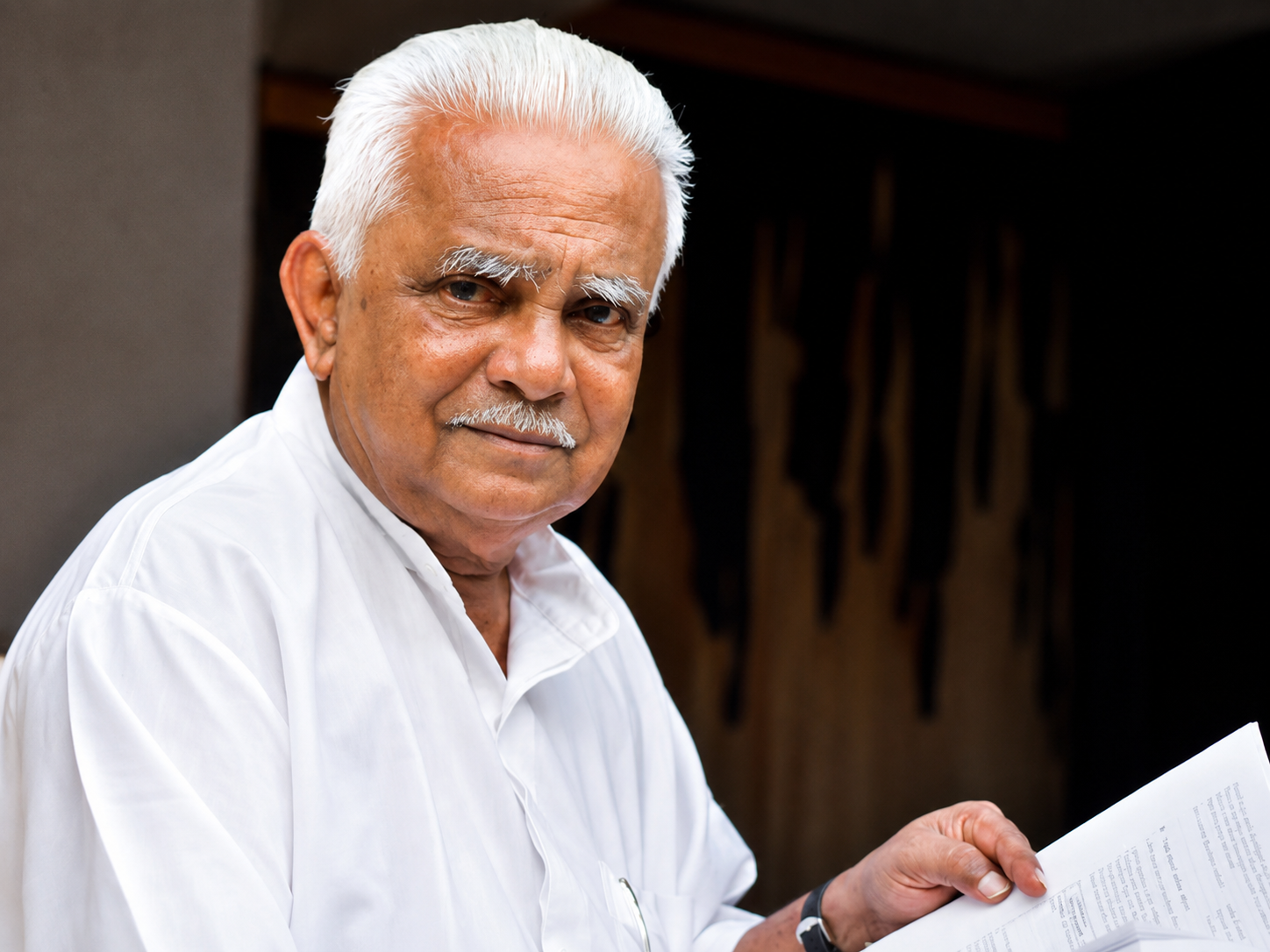
Dr. A.T. Ariyaratne: Awakening Through Service
Make it stand out
“When we work towards the welfare of all, the means we use have to be based on Truth, Non-violence and Selflessness in conformity with Awakening of All.”
— A.T. Ariyaratne
During the twentieth century, Sri Lanka faced profound social and economic transformation. While cities experienced rapid development, many rural villages remained without adequate roads, schools, healthcare, clean water, and economic opportunity. The widening divide between urban and rural life threatened not only material well-being but also the social fabric that had long sustained village communities.
Amid these conditions, Dr. Ahangamage Tudor Ariyaratne envisioned a different path for development. Drawing from Buddhist ethics, Gandhian philosophy, and Sri Lanka's traditions of communal labor, he founded the Sarvodaya Shramadana Movement, a grassroots movement rooted in the belief that lasting change begins with the awakening of human consciousness. Rather than treating development as the delivery of resources from institutions to communities, Ariyaratne understood it as a participatory process through which people rediscover their own capacity for cooperation, compassion, and collective responsibility. His work has become one of the world's most enduring models of spiritually grounded community development.
Dr. Ahangamage Tudor Ariyaratne (1931–2024) was a Sri Lankan educator, Buddhist philosopher, humanitarian, and founder of the Sarvodaya Shramadana Movement. Born in Unawatuna, Sri Lanka, he studied education and economics before becoming a high school teacher at Nalanda College in Colombo.
In 1958, Dr. Ariyaratne organized a volunteer work camp that brought students into a rural village to help improve local infrastructure through shared labor. This experience became the foundation of the Sarvodaya Shramadana Movement, which would eventually grow into Sri Lanka's largest grassroots development organization, working in more than 15,000 villages.
Throughout his life, Ariyaratne championed rural development, conflict resolution, environmental stewardship, education, healthcare, community banking, disaster relief, and peacebuilding. His contributions earned numerous international recognitions, including the Niwano Peace Prize, the Gandhi Peace Prize, and nominations for the Nobel Peace Prize.
At the heart of Dr. Ariyaratne's philosophy is the understanding that authentic development begins with the awakening of human consciousness. Material progress alone cannot cultivate healthy societies without compassion, ethical responsibility, and collective participation. He adopted the Sanskrit word Sarvodaya, meaning "the awakening of all" or "the well-being of all," as the guiding vision for his movement. For Ariyaratne, individual transformation and community transformation were inseparable. As people awaken to their interdependence, they naturally begin to care for one another and for the places they inhabit.
Central to this vision is Shramadana, often translated as "the gift of labor." Ariyaratne expanded this ancient practice beyond physical work to include the generous offering of one's knowledge, skills, creativity, time, and compassion. Service becomes an expression of human dignity rather than charity. When communities gather to build roads, restore watersheds, establish schools, or plant trees, they are simultaneously cultivating trust, cooperation, and shared purpose.
His work also presents an ecological understanding of society. Human flourishing depends upon healthy forests, fertile soils, clean water, local economies, and resilient relationships. Environmental restoration and social renewal are not separate endeavors but expressions of the same living system. Development, in this view, is measured not simply by economic growth but by the vitality of communities and the quality of their relationships with one another and with the natural world.
Key Teachings
Sarvodaya — the awakening and well-being of all beings.
Shramadana — selfless service through the generous offering of labor, knowledge, and compassion.
Development begins with consciousness rather than economics alone.
Community participation creates lasting and locally rooted change.
Inner transformation and social transformation evolve together.
Nonviolence is the foundation of sustainable peace and development.
Local self-reliance strengthens resilient communities.
Environmental stewardship is inseparable from human well-being.
Shared work builds shared humanity, expressed through the principle, "We build the road, and the road builds us."
Dr. Ariyaratne expanded the meaning of development beyond infrastructure and economic growth. His work demonstrated that the deepest forms of progress arise through relationships rooted in trust, cooperation, and shared responsibility. Villages become resilient when neighbors organize around common purpose, contribute their own gifts, and participate directly in shaping their future.
His philosophy continues to influence engaged Buddhism, participatory development, peacebuilding, regenerative agriculture, and community organizing around the world. In an era shaped by ecological degradation, social fragmentation, and widening inequality, Sarvodaya offers a model of regeneration grounded in reciprocity rather than extraction. It reminds us that restoring landscapes and restoring communities are parallel expressions of the same work: cultivating relationships that sustain life.
We honor Dr. A.T. Ariyaratne for illuminating a path where service becomes spiritual practice and community becomes the foundation of renewal. His vision demonstrates that meaningful change begins with ordinary people choosing to care for one another and the places they call home. Through the Sarvodaya Shramadana Movement, he offered the world a living example of compassion organized into action. His legacy continues to inspire movements dedicated to peace, ecological stewardship, and the awakening of our shared humanity.
Resources & Further Reading
Collected Works of A.T. Ariyaratne (Sarvodaya Publications)
George D. Bond, Buddhism at Work: Community Development, Social Empowerment and the Sarvodaya Movement
